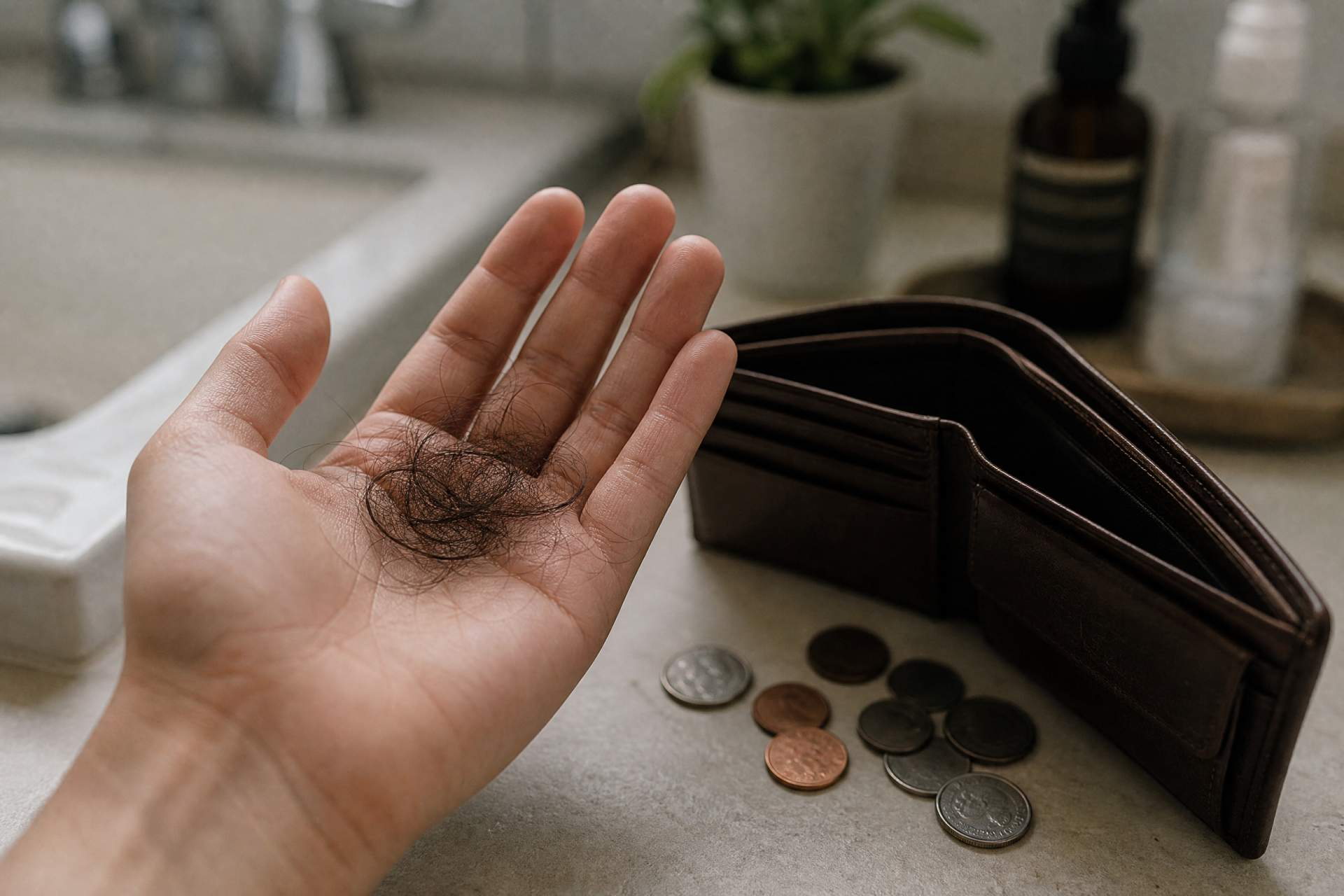
You run your fingers through your hair in October. More strands than usual come with them. You check the shower drain. Panic sets in.
E.g. :Brushing Bleeding: Why Your Overspent Care Fails
- 1、Your Hair Follicles Run on a Cycle, Not a Switch
- 2、The Financial Analogy: Rebalancing Your Hair Portfolio
- 3、Three Reasons Your Seasonal Shedding Might Be a Signal
- 4、A Diagnostic Checklist, Not a Panic Plan
- 5、The One Intervention That Works for All Three Categories
- 6、FAQs
Before you order expensive serums, let me tell you something most people don’t know: seasonal hair shedding is not a defect. Trying to stop it entirely might be worse for your long-term hair density.
Your Hair Follicles Run on a Cycle, Not a Switch
Each hair goes through three phases. Anagen (growth) lasts 2-7 years. Catagen (transition) lasts two weeks. Telogen (resting) lasts three months. At any time, 85-90% of hairs are in anagen. Normal daily loss is 50-100 hairs.
But twice a year — late spring and early autumn — that percentage shifts. A 2017 study in the British Journal of Dermatology confirmed two peaks of hair loss searches: April-May and September-October. A follow-up study found that resting-phase hairs increase by nearly 10% in July, meaning shedding shows up in autumn.
What you see in autumn is not new loss. It is the delayed result of a normal seasonal shift.
The Financial Analogy: Rebalancing Your Hair Portfolio
Think of your scalp as a diversified portfolio. Most hairs are in long-term growth. A smaller portion is in cash — resting, not growing. Autumn is a rebalancing event. The spike in shedding is a liquidation of old hairs so new ones can grow.
If you interfere by trying to keep every strand, you disrupt replacement. A 2020 paper in the International Journal of Trichology noted that prolonged use of topical treatments without allowing natural telogen can lead to “synchronized shedding” later — a much worse loss event. You are delaying the inevitable rebalance.
Three Reasons Your Seasonal Shedding Might Be a Signal
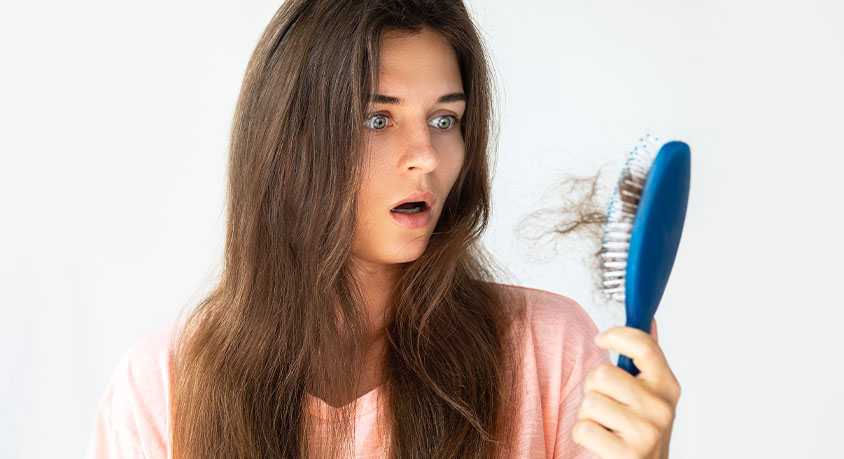
Most autumn shedding is normal, but sometimes it’s a diagnostic window.
Reason 1: Nutritional “Liquidity” Drops
Hair follicles need steady iron, zinc, and B vitamins. If you spent summer eating lighter or traveling erratically, reserves may have dipped. A 2019 study found that ferritin (stored iron) below 40 ng/mL correlates with increased shedding. The reference range says 20 is “normal,” but for hair, 40-70 is better.
Audit your diet from the past 60 days. Have you eaten fewer eggs, legumes, or leafy greens? Targeted refeeding often resolves it.
Reason 2: Cortisol’s Seasonal Pattern
Late summer often brings back-to-school pressure or disrupted sleep. Cortisol pushes follicles prematurely into telogen. Shedding shows up 8-12 weeks later — right around October.
This is a lagging indicator. By the time you see loss, the stressful period may be over. Review your sleep logs from July and August.
Reason 3: Scalp Environment Shifts
Higher humidity in summer promotes fungal growth. Seborrheic dermatitis often flares in late summer. Inflammation around the follicle can trigger localized shedding.
If your shedding comes with itching or flakes, treat the environment first. A gentle over-the-counter antifungal shampoo used twice weekly for three weeks can help.
A Diagnostic Checklist, Not a Panic Plan
Classify your shedding into one of three categories.
Category A: Normal seasonal rebalancing. You lose 50-100 hairs daily. Shedding lasts 4-6 weeks. You see fine new hairs growing. No itching. Action: Do nothing except maintain good nutrition. Use a wide-tooth comb.
Category B: Nutritional or stress-driven lag. Shedding is 150-200 hairs daily. Started suddenly 8-12 weeks after a known stressor. You feel tired or have brittle nails. Action: Add one high-protein meal and one iron-rich snack per day for 4 weeks. If shedding continues beyond 8 weeks, test ferritin and vitamin D.
Category C: Inflammatory or medical. Shedding is patchy, not diffuse. You see circular bald spots, scaling, or pain. Other symptoms like fatigue or joint pain. Action: See a dermatologist. This is not seasonal. It could be alopecia or thyroid disease.
The One Intervention That Works for All Three Categories
Regardless of category, there is a low-cost, high-return action: scalp massage.
A 2019 randomized trial in Eplasty showed that daily 4-minute scalp massage increased hair thickness after 24 weeks. The mechanism: gentle tension stimulates growth factors and blood flow to the follicle. It also disperses sebum, reducing inflammation.
Use fingertips, not nails. Massage in small circles from hairline to crown. Four minutes while watching a video. This is your hair’s dividend reinvestment plan — small, consistent, compounding.
You do not need to fear autumn shedding. Your body is not failing. It is following a rhythm older than your anxiety. Most of what you lose this season was already resting. The new growth started weeks ago. Trust the cycle. Support the system. Stop treating a rebalance as a crash.
FAQs
Q: How much daily hair loss is too much?
A: The 50-100 strand rule is an average. Better: collect your drain and brush hair for three normal days. If autumn numbers are consistently double that baseline for more than 8 weeks, investigate. Sudden clumps of 200+ hairs daily warrant a medical check regardless of season.
Q: Does wearing a hat cause more shedding?
A: No, unless so tight it cuts circulation. But hats can trap sweat, worsening seborrheic dermatitis. Wash hats weekly and let your scalp air out. Friction from cap edges can cause breakage along the hairline, not true shedding from the root.