You sit at your desk, shoulders back, chest out, forcing yourself to “sit up straight” like you’ve been told your whole life. But by the end of the day, your lower back aches, your neck feels stiff, and you’re tempted to slump forward just to find relief. You wonder: why does sitting straight hurt so much? What if the “perfect posture” you’ve been taught is actually straining your back?
- 1、Sitting Up Straight Strains Your Spine
- 2、Slouching Isn’t the Only Posture Mistake
- 3、How Long You Sit Matters More Than How You Sit
- 4、How to Sit Comfortably and Protect Your Back
- 5、FAQs
For decades, we’ve been told that sitting up straight is the key to avoiding back pain. But recent research shows that rigid, upright posture can be just as harmful as slouching. The spine is designed to curve naturally, and forcing it into an unnatural straight line puts unnecessary pressure on the muscles, discs, and joints. Let’s explore the science of spinal health, the mistakes we make with posture, and how to sit comfortably without pain.
Sitting Up Straight Strains Your Spine
The human spine has three natural curves: a forward curve in the neck, a backward curve in the upper back, and a forward curve in the lower back. These curves act like a shock absorber, distributing weight evenly and reducing strain. When you sit up perfectly straight, you flatten these natural curves, forcing your spine into a rigid position.
A 2022 study published in the Journal of Physical Therapy Science found that people who sat in a rigid, upright posture for 1 hour experienced 30% more muscle tension in the lower back than those who sat in a slightly relaxed, natural posture. Over time, this tension can lead to chronic back pain, muscle fatigue, and even disc damage.
The Natural Posture Your Spine Prefers
Instead of sitting perfectly straight, aim for a relaxed, neutral spine. Sit back in your chair, with your lower back supported (a lumbar pillow can help), and your hips slightly higher than your knees. Let your shoulders fall naturally, not forced back, and keep your neck in line with your spine—avoid craning your head forward to look at a screen.
Slouching Isn’t the Only Posture Mistake
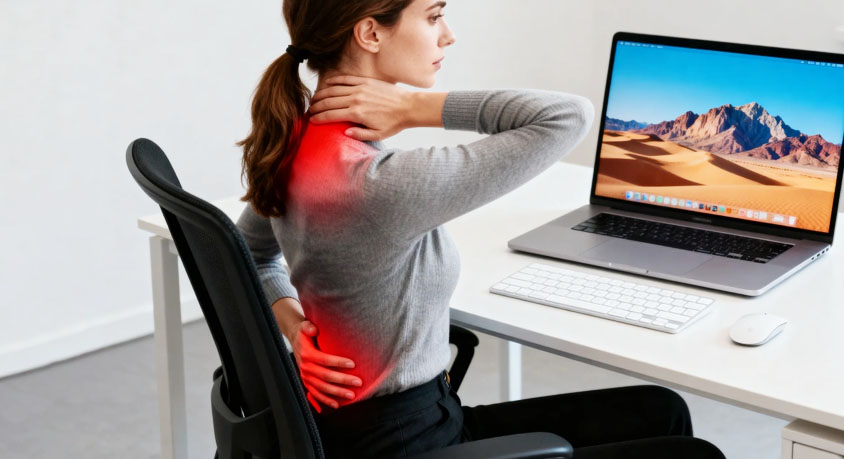
While rigid posture is harmful, slouching is still a problem—but not for the reasons you think. Slouching doesn’t just make you look unprofessional; it stretches the muscles in your upper back and strains the muscles in your lower back, leading to imbalances. Over time, this can cause rounded shoulders, a forward head posture, and increased back pain.
The real issue is not slouching itself, but staying in any single posture for too long. Our bodies are designed to move, and sitting in one position—whether straight or slouched—for hours on end is the biggest cause of back pain.
How Long You Sit Matters More Than How You Sit
A 2023 study by the World Health Organization found that adults who sit for more than 8 hours a day are 2x more likely to develop chronic lower back pain, regardless of their posture. Even if you sit “perfectly straight,” staying stationary for hours puts constant pressure on the spinal discs, which need movement to stay healthy.
Discs in the spine are like sponges—they absorb nutrients and release waste when you move. When you sit still, discs become compressed, leading to stiffness and pain. Taking short breaks every 30-45 minutes to stand, stretch, or walk around can reduce this pressure and keep your spine healthy.
How to Sit Comfortably and Protect Your Back
You don’t need to perfect your posture—you just need to make small, sustainable changes to reduce strain:
- Use an ergonomic chair that supports your lower back and allows you to sit with a neutral spine.
- Place a lumbar pillow behind your lower back if your chair doesn’t have built-in support.
- Keep your feet flat on the floor, with your knees bent at a 90-degree angle.
- Position your screen at eye level to avoid craning your neck forward.
- Take a 2-3 minute break every 30 minutes to stretch your back, shoulders, and neck.
FAQs
Q: Is it better to sit or stand for back health?
A: Neither—staying in one position for too long is the problem. Aim to alternate between sitting and standing throughout the day, and move as much as possible.
Q: Can a lumbar pillow really help with back pain?
A: Yes! A lumbar pillow supports the natural curve of your lower back, reducing pressure on the spine and muscles. Look for a pillow that’s firm enough to provide support but soft enough to be comfortable.
Q: How long does it take to fix posture-related back pain?
A: It depends on how long you’ve had the pain and how consistent you are with changing your habits. Most people see improvement within 2-4 weeks of practicing neutral posture and taking regular breaks.