
A few years ago, a friend of mine—a devoted runner in his late forties—found himself staring at an MRI of his own knee. He had done everything “right,” by conventional standards. He logged his miles religiously, pushed through the discomfort, and celebrated the exhaustion. Yet here he was, not with a medal, but with a diagnosis of chronic patellar tendinopathy and a note from his doctor suggesting he “take it easy.” His first reaction was frustration: I’m not training hard enough. But the truth, as we eventually discussed over coffee, was quite the opposite. He had been training too hard, too narrowly, and for too long without asking a fundamental question: what is this all for?
- 1、Redefining Fitness: Moving from Intensity to Sustainability
- 2、The Hidden Architecture: Functional Flexibility and Fascial Health
- 3、Muscle as an Endocrine Organ: The Internal Pharmacy
- 4、The Quiet Power of Low-Intensity Steady State: Zone 2 Training and the Art of Walking
- 5、Building a Sustainable Framework for Longevity Fitness
- 6、FAQs
That question—what is this all for?—lies at the heart of a quiet but profound shift in how we think about movement. It is a movement away from the culture of “over-training” and toward something far more valuable: sustainability. It asks us to reconsider not just how we exercise, but why. And in doing so, it invites us to see our bodies not as machines to be pushed to their limits, but as ecosystems to be tended over a lifetime.
Redefining Fitness: Moving from Intensity to Sustainability
We have been conditioned to believe that a good workout must feel punishing. There is a cultural bias toward intensity, toward the visible evidence of suffering. But if we look at the data on long-term health outcomes, a different picture emerges. A 2021 study published in The Lancet followed over 400,000 adults and found that while any physical activity reduced mortality risk, the benefits were most pronounced among those who engaged in moderate, consistent activity—not necessarily the most intense. The goal, it seems, is not to maximize effort in a single session, but to accumulate movement across a lifetime.
Rethinking Muscle: The Metabolic Currency
This shift in perspective begins with how we view muscle. For too long, muscle has been framed as an aesthetic commodity—something to be sculpted for appearance. But muscle is far more valuable than that. It is, in a very real sense, metabolic currency. Every pound of muscle tissue acts as a reservoir for glucose, a regulator of insulin sensitivity, and a protector against the metabolic decline that often accompanies aging. When we prioritize muscle health, we are not chasing a look; we are investing in a future where our bodies remain resilient, capable, and independent.
The Hidden Architecture: Functional Flexibility and Fascial Health
When we think about fitness, we rarely think about our fascia. Yet this continuous web of connective tissue—wrapping around muscles, bones, and organs—plays a crucial role in how we move and feel. Unlike muscle, which responds quickly to training, fascia adapts slowly. And it suffers quietly under the weight of our sedentary habits.
Fascial Stiffness and the Cost of Sitting
A 2018 review in Frontiers in Physiology highlighted that fascial stiffness, often caused by prolonged sitting and repetitive movement patterns, can lead to chronic back pain, reduced proprioception (the body’s ability to sense its own position), and increased injury risk. Globally, lower back pain affects an estimated 570 million people at any given time, according to the Global Burden of Disease Study. Many of these cases are not the result of a single traumatic event, but the slow accumulation of fascial restriction.
Myofascial Release and Posture Correction
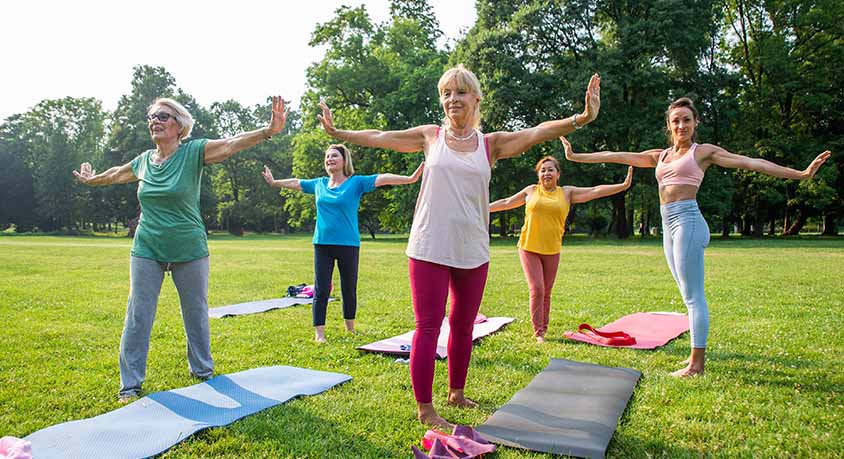
This is where simple tools—like a foam roller or a lacrosse ball—become not luxuries, but essentials. Gentle myofascial release helps restore hydration to the tissue, breaks down adhesions, and allows the nervous system to reset muscle tension. When paired with intentional posture correction, it transforms how we inhabit our bodies. Functional flexibility is not about performing party tricks; it is about maintaining the ability to move through life with ease—to reach for a high shelf, to get up from the floor, to turn and look behind you without stiffness or hesitation.
Muscle as an Endocrine Organ: The Internal Pharmacy
Perhaps the most fascinating frontier in exercise science is the discovery that skeletal muscle functions as an endocrine organ. When muscles contract, they release signaling molecules called myokines. These myokines travel through the bloodstream, communicating with the liver, the brain, adipose tissue, and even the immune system.
Strength Training and Myokine Release
A landmark 2021 article in Nature Reviews Endocrinology detailed how myokines such as IL-6 (interleukin-6)—often misunderstood as a purely inflammatory marker—are released during exercise and actually stimulate anti-inflammatory responses, improve glucose metabolism, and support cognitive function. This means that when you engage in regular strength training, you are not simply building muscle; you are activating an internal pharmacy that helps regulate systemic health.
For those of us who may have previously viewed strength training as intimidating or optional, this reframing is liberating. It suggests that even modest resistance work—bodyweight squats, resistance band exercises, simple compound movements—has effects that extend far beyond the muscles themselves. It becomes a form of internal communication, a way of telling our bodies to stay youthful, resilient, and metabolically efficient.
The Quiet Power of Low-Intensity Steady State: Zone 2 Training and the Art of Walking
If strength training is the foundation, then low-intensity steady-state cardio—particularly Zone 2 Training—is the architecture that supports it. Zone 2 refers to exercise performed at approximately 60–70% of your maximum heart rate, the pace at which you can still hold a conversation but would prefer not to. For many of us, this feels counterintuitive. We wonder: is this even working?
Why Zone 2 Training Matters for Longevity
Physiologically, Zone 2 Training is where we optimize mitochondrial function. Mitochondria are the energy powerhouses of our cells, and their efficiency is a key determinant of metabolic health and aging. A 2020 study in Cell Metabolism found that consistent Zone 2 Training significantly improved mitochondrial capacity, which in turn enhanced insulin sensitivity and reduced markers of systemic inflammation.
Walking as Foundational Movement
And the most accessible form of Zone 2 Training? Walking. A 2022 study in the Journal of the American College of Cardiology tracked over 70,000 individuals and found that brisk walking for just 30 minutes, five days a week, was associated with a 20% reduction in all-cause mortality. The beauty of walking lies in its sustainability. Unlike high-impact activities, walking accumulates minimal stress on joints and the central nervous system. It can be done daily, without the cycle of injury and recovery that often derails more aggressive fitness routines.
To transform walking into an effective practice, consider consistency over intensity. A 45-minute walk at a pace that feels steady but not breathless—perhaps in nature, where the sensory experience adds another layer of nervous system regulation—becomes not just exercise, but medicine.
Building a Sustainable Framework for Longevity Fitness
So where does this leave us? If we step away from the all-or-nothing mindset, what does a realistic, sustainable movement practice look like? It begins with a shift in identity: from being a “workout warrior” to being a “movement generalist.”
A balanced framework might include three core components:
- Strength training, twice a week, focusing on compound movements that engage multiple muscle groups. This stimulates myokine release and builds the metabolic currency of muscle mass.
- Zone 2 cardio, three times a week, in the form of brisk walking, cycling, or swimming. This supports mitochondrial health and cardiovascular efficiency without depleting recovery reserves.
- Daily functional flexibility, practiced in small doses—five to ten minutes of myofascial release, gentle stretching, or mobility work. This maintains the health of fascia, supports posture correction, and prevents the slow accumulation of stiffness.
This approach acknowledges that rest is not a gap in the plan; it is the space where adaptation occurs. By prioritizing sleep, managing stress, and listening to the body’s signals, we allow the physiological benefits of movement to fully integrate.
FAQs
Q: I have a busy schedule. Is Zone 2 Training really worth my time if it doesn’t feel intense?
A: Yes, and for a specific reason. Zone 2 Training builds your aerobic foundation—the mitochondrial capacity that determines how efficiently your body uses energy. High-intensity work relies on this foundation; without it, intense efforts become unsustainable and carry higher injury risk. Think of Zone 2 as the principal investment, and high-intensity work as the occasional dividend. Even 30 minutes of brisk walking, done consistently, yields measurable improvements in metabolic health and cardiovascular resilience.
Q: How do I incorporate strength training without access to a gym or heavy equipment?
A: You don’t need a gym. The body responds to tension, not necessarily to heavy weights. Bodyweight exercises like squats, lunges, push-ups, and glute bridges provide sufficient stimulus, especially when performed with controlled tempo. Resistance bands are an excellent, portable alternative that allow for progressive overload. The goal is consistency and gradual progression, not maximal load. Two focused sessions a week, using simple equipment, can maintain and even build muscle mass for most individuals.
Q: I spend most of my day sitting. What is the most effective way to counteract that?
A: Focus on two things: thoracic spine mobility and consistent interruption of sitting. The upper back (thoracic spine) tends to stiffen with prolonged sitting, forcing the neck and lower back to compensate. A simple daily practice—using a foam roller to gently extend the upper back, or performing “thread the needle” stretches—takes five minutes and significantly improves posture and reduces tension. Equally important is breaking up sitting time. Even two minutes of standing or walking every hour helps maintain fascial health and metabolic function.